Concrete Pavers vs. Traditional Poured Concrete: Choosing the Optimal Solution for Outdoor Living Spaces
By Total Care Concrete Sat Jan 31 20267 minutes
Introduction: The Outdoor Surface Dilemma
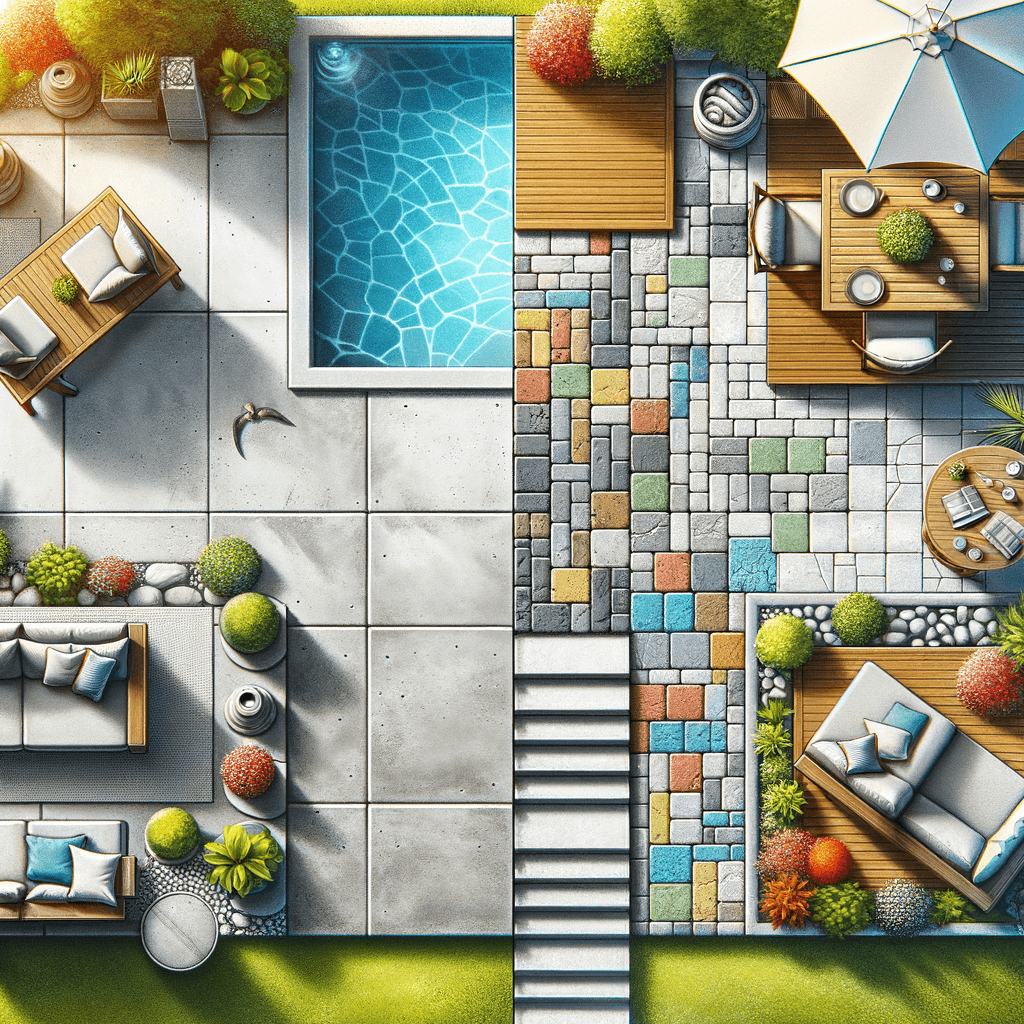
Homeowners and landscape designers face a pivotal decision when selecting the ideal surface for patios, walkways, and entertainment zones: concrete pavers or traditional poured concrete. Both options offer distinct advantages, but subtle differences in installation, aesthetics, and long-term performance can significantly impact the functionality and beauty of your outdoor living space.Understanding Concrete Pavers and Poured Concrete
Concrete pavers are precast, interlocking units available in myriad shapes, textures, and colors, offering modular flexibility. In contrast, poured concrete involves casting a continuous slab on-site, which can be finished in various textures but is inherently monolithic. Knowing the fundamental distinctions is essential before making an investment.| Characteristic | Concrete Pavers | Poured Concrete |
| Installation | Individual units laid over a prepared base | Continuous slab poured and finished on site |
| Aesthetics | Wide variety of shapes, colors, and patterns | Limited by finishing techniques |
| Repairability | Easy to replace individual units | Repairs often visible and labor-intensive |
| Durability | Resistant to cracking due to joint flexibility | Prone to cracking over time |
| Cost | Higher initial material cost, lower repair cost | Lower initial cost, higher repair cost |
Key Benefits of Concrete Pavers
- Enhanced design versatility for creative patterns and borders
- Superior slip resistance, ideal for pool decks and walkways
- Segmented construction reduces risk of surface cracking
- Simple spot repairs—replace only damaged pavers
- Permeable options support sustainable drainage
“Pavers empower homeowners to express their unique style while addressing practical needs like drainage and safety.”
Advantages of Poured Concrete Surfaces
Poured concrete remains a staple for expansive patios and driveways due to its seamless appearance and rapid installation. Its ability to be shaped into organic curves or large geometric slabs makes it a favorite for minimalist or modern landscapes.- Cost-effective for large, uninterrupted surfaces
- Customizable with broom, salt, or trowel finishes
- Lower maintenance when properly sealed
- Structural monolith ideal for heavy loads
Installation and Maintenance Considerations
Installation complexity and long-term maintenance are pivotal factors in the decision-making process. Pavers require meticulous base preparation and precise placement, while poured concrete demands expertise in site grading and finishing to avoid future cracking or settling.“A well-prepared subbase is the foundation of any lasting outdoor surface, regardless of material choice.”
| Aspect | Concrete Pavers | Poured Concrete |
| Installation Time | Longer (individual placement) | Shorter (pour and finish) |
| Maintenance | Weed growth in joints; occasional leveling | Crack repair; periodic sealing |
| Lifespan | 20-30 years with maintenance | 25-40 years with maintenance |
Environmental Impact and Sustainability
Eco-conscious property owners increasingly seek materials that reduce environmental impact. Permeable concrete pavers promote groundwater recharge and mitigate stormwater runoff, while poured concrete can incorporate recycled aggregates or supplementary cementitious materials to lower its carbon footprint.- Permeable pavers reduce urban heat islands and manage runoff
- Locally sourced aggregates minimize transportation emissions
- Recycled content in both options supports circular construction